Plato and Aristotle are tow of the
world's most influential philosophers. Both had completely different
views on the world. They were complete opposites or binary opposites
and with both views comes certain consequences.
Plato believed in innate ideas, he
believed our souls lived in a World of Ideas, before it lived in our
bodies, that's why when we see a 'table,' we know it's a 'table' for
soul already saw the idea 'table' in the World of Ideas. He used more
deductive reasoning to come to conclusions. He believed our souls are
immortal. Now, if we choose to believe what Plato believed there are
certain consequences. From this idea of souls being immortal and the
World of Ideas, the idea of reincarnation could have been a product.
For our soul never dies, it just has a new 'life' or body after our
current body dies, according to Plato. From Plato the idea “soul
mate” is formed, our soul was connected to another's in the World
of Ideas, they were separated to be later joined again in the world
we live in, in marriage. The idea that we already knew everything, we
just lose it and we have to relearn it can also come from Plato's
main idea or concept.
Aristotle believed in innate reason,
he believed that we are all born with reason but it is empty and as
we experience the world our reason fills. He believed that everything
in nature has a purpose. He believed women were less than or equal to
dogs. He used inductive reasoning to come to conclusions. He also
believed that everything in life has a category or a place it can be
placed/put. He also used logic to discover the unknown and through
expPlato and Aristotle are tow of the
world's most influential philosophers. Both had completely different
views on the world. They were complete opposites or binary opposites
and with both views comes certain consequences.
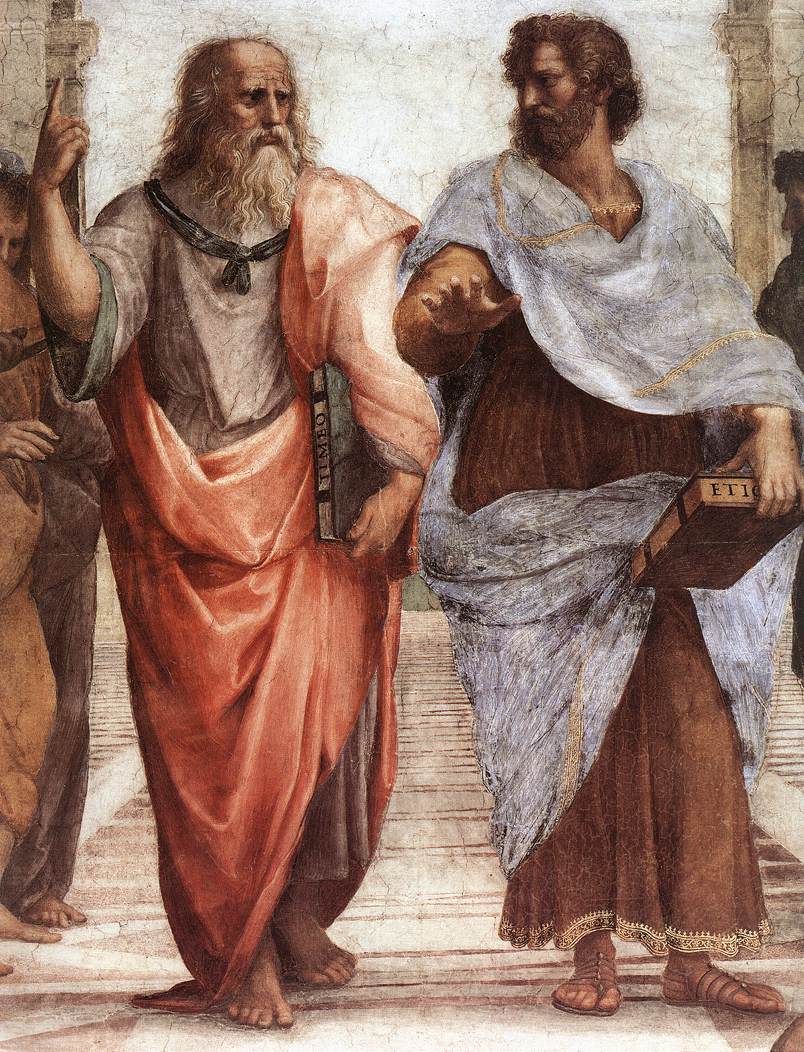
Plato believed in innate ideas, he
believed our souls lived in a World of Ideas, before it lived in our
bodies, that's why when we see a 'table,' we know it's a 'table' for
soul already saw the idea 'table' in the World of Ideas. He used more
deductive reasoning to come to conclusions. He believed our souls are
immortal. Now, if we choose to believe what Plato believed there are
certain consequences. From this idea of souls being immortal and the
World of Ideas, the idea of reincarnation could have been a product.
For our soul never dies, it just has a new 'life' or body after our
current body dies, according to Plato. From Plato the idea “soul
mate” is formed, our soul was connected to another's in the World
of Ideas, they were separated to be later joined again in the world
we live in, in marriage. The idea that we already knew everything, we
just lose it and we have to relearn it can also come from Plato's
main idea or concept.
Aristotle believed in innate reason,
he believed that we are all born with reason but it is empty and as
we experience the world our reason fills. He believed that everything
in nature has a purpose. He believed women were less than or equal to
dogs. He used inductive reasoning to come to conclusions. He also
believed that everything in life has a category or a place it can be
placed/put. He also used logic to discover the unknown and through
experience we gain knowledge. If we choose to believe in what
Aristotle believed we have another list of consequences. From
Aristotle we have categories for pretty much everything; socks go in
a sock drawer, dresses are hung up in the closet, jeans go in the
jean drawer. We also have categories for all living things: domain,
kingdom, phylum, class, order, family, genus, species, this
categorization was created by Linnaeus, but was most likely inspired
by Aristotle. We can get the idea of purpose from Aristotle, for
example, why does it rain? To water plants to feed animals and humans
is the answer Aristotle would have given. We can get the idea of
sexism, masculinism, and feminism where men think they are better
than women or women are better than men, from the idea of women being
less than or equal to dogs. We get the saying or concept of
“experience is the bets teacher.” We can also take scientists who
use logic to discover the unknown like Aristotle, there are many
people who use logic to discover the unknown.
As can be seen, Aristotle and Plato
think differently, they are binary opposites. Out of each thought
though comes a consequence, from either side, deeds were done based
upon or influenced by these philosophic ideas. They are two of the
world's most influential philosophers and hopefully now we can see
why.erience we gain knowledge. If we choose to believe in what
Aristotle believed we have another list of consequences. From
Aristotle we have categories for pretty much everything; socks go in
a sock drawer, dresses are hung up in the closet, jeans go in the
jean drawer. We also have categories for all living things: domain,
kingdom, phylum, class, order, family, genus, species, this
categorization was created by Linnaeus, but was most likely inspired
by Aristotle. We can get the idea of purpose from Aristotle, for
example, why does it rain? To water plants to feed animals and humans
is the answer Aristotle would have given. We can get the idea of
sexism, masculinism, and feminism where men think they are better
than women or women are better than men, from the idea of women being
less than or equal to dogs. We get the saying or concept of
“experience is the bets teacher.” We can also take scientists who
use logic to discover the unknown like Aristotle, there are many
people who use logic to discover the unknown.
As can be seen, Aristotle and Plato
think differently, they are binary opposites. Out of each thought
though comes a consequence, from either side, deeds were done based
upon or influenced by these philosophic ideas. They are two of the
world's most influential philosophers and hopefully now we can see
why.

No comments:
Post a Comment